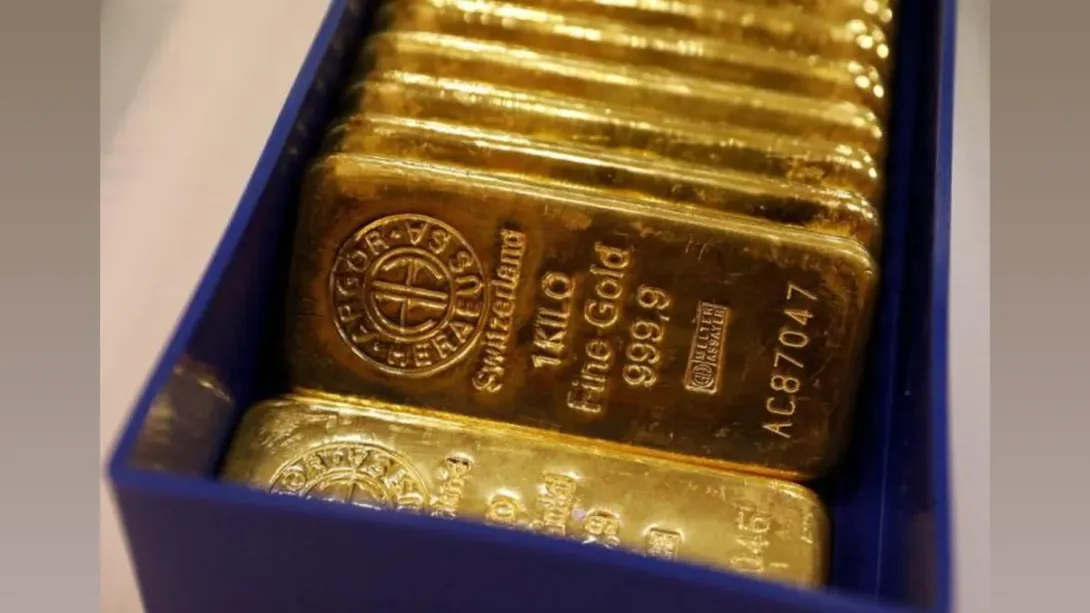
Gold prices are expected to remain volatile in the coming week as global investors closely monitor geopolitical tensions in the Middle East alongside key macroeconomic indicators that could influence market sentiment. Analysts say uncertainty in international relations often strengthens demand for safe-haven assets such as gold, while signs of de-escalation may trigger profit-taking and price corrections. At the same time, upcoming economic data releases are likely to influence currency movements and interest-rate expectations, further affecting precious metal prices. Silver, meanwhile, is moving through a consolidation phase but continues to display significant price swings, reflecting the broader uncertainty shaping global commodity markets.
Geopolitical Risks Drive Safe-Haven Demand
Gold markets are preparing for a potentially turbulent trading week as geopolitical developments in the Middle East continue to influence investor sentiment. Historically, periods of geopolitical instability have prompted investors to shift capital toward safe-haven assets such as gold, which is widely regarded as a hedge against uncertainty and financial volatility.
Market analysts say any escalation in regional tensions could push gold prices higher as investors seek protection from broader market risks. Conversely, signs of diplomatic progress or de-escalation may weaken demand for the metal, triggering short-term price corrections.
The precious metal’s sensitivity to geopolitical developments has become particularly evident in recent weeks as traders react swiftly to shifts in global risk perception.
Macroeconomic Indicators to Influence Price Direction
Beyond geopolitical developments, economic data releases scheduled for the coming week will also play a crucial role in shaping gold’s price trajectory.
Key macroeconomic indicators—including inflation data, employment figures, and central bank policy signals—often have a direct impact on currency movements and interest-rate expectations. Since gold does not generate interest income, its attractiveness typically increases when real interest rates decline or when financial markets face heightened uncertainty.
Analysts suggest that stronger-than-expected economic data could strengthen major currencies and reduce the appeal of non-yielding assets like gold, while weaker data may reinforce investor demand for the metal.
Domestic Market Sentiment Remains Cautious
In the domestic commodities market, traders are expected to adopt a cautious stance as they evaluate both global developments and currency fluctuations.
Gold prices in India often reflect not only international market movements but also the performance of the rupee against major global currencies. Any sharp movement in exchange rates can amplify price fluctuations in the local market, even when global bullion prices remain relatively stable.
This interconnected dynamic makes the domestic gold market particularly sensitive to both international developments and macroeconomic policy signals.
Silver Markets Enter a Consolidation Phase
Silver, often considered both a precious and industrial metal, is currently moving through a consolidation period after experiencing significant price swings in recent sessions.
Market observers note that while silver has shown signs of stabilizing within a defined trading range, volatility remains elevated. The metal’s dual role—as both a safe-haven asset and a key component in industrial production—means its price movements often reflect a blend of financial market sentiment and industrial demand trends.
As global economic conditions evolve, silver may continue to experience sharp fluctuations driven by shifts in both investment demand and industrial activity.
Investor Strategy in an Uncertain Environment
For investors, the current environment highlights the importance of closely tracking geopolitical developments and macroeconomic indicators when making commodity market decisions.
Gold and silver markets are likely to remain sensitive to both political developments and economic signals in the weeks ahead. In periods of heightened uncertainty, these precious metals frequently serve as portfolio stabilizers, offering diversification benefits during market turbulence.
However, analysts caution that short-term volatility could remain elevated as markets respond to rapidly evolving global events and economic data releases.
Outlook for the Week Ahead
Looking forward, the direction of gold prices will largely depend on whether geopolitical tensions escalate or ease, as well as how forthcoming economic data reshapes expectations for global monetary policy.
If uncertainty persists, gold may continue to attract safe-haven demand. On the other hand, any signs of geopolitical stability combined with stronger economic indicators could prompt investors to shift capital toward risk-oriented assets.
For now, the precious metals market appears set for another week of heightened volatility, underscoring the complex interplay between geopolitics, macroeconomics, and investor psychology.
Comments