Auto Sector

By Gurjot Singh , 31 January 2026

Shares of Maruti Suzuki India Ltd. declined in early trading following the release of its third-quarter earnings, as investors reacted to pressures on margins despite steady sales volumes. While the country’s largest carmaker reported resilient demand and stable revenue growth, higher input costs and competitive pricing weighed on profitability. The market response reflected concerns over near-term earnings visibility amid rising operating expenses and an intensifying price war in the passenger vehicle segment.

By Binnypriya Singh , 28 January 2026

Renault is preparing to reintroduce the Duster in India, signaling a renewed push into one of the world’s fastest-growing SUV markets. The relaunch reflects the French automaker’s intent to regain momentum after losing ground in the highly competitive mid-size SUV segment. Industry analysts view the move as a strategic effort to capitalize on India’s strong consumer demand for utility vehicles, which now dominate passenger vehicle sales.

By Gurjot Singh , 27 January 2026

Skoda Volkswagen Group has underscored the importance of regulatory consistency and streamlined customs procedures to unlock the next phase of growth for India’s automotive sector. The company argues that predictable policy frameworks, coupled with faster and more transparent import-export processes, are essential to attract long-term investments and strengthen local manufacturing. As India positions itself as a global auto and mobility hub, Skoda Volkswagen believes structural reforms—rather than short-term incentives—will determine competitiveness.

By Binnypriya Singh , 25 January 2026

A recent study by The Energy and Resources Institute (TERI) has urged policymakers to formally include Auto LPG in India’s alternative fuel framework, citing its immediate environmental and economic benefits. The report argues that Auto LPG offers a practical, low-emission solution for reducing vehicular pollution while supporting energy diversification. With existing infrastructure, lower carbon intensity, and competitive costs compared with conventional fuels, Auto LPG could play a complementary role alongside electric mobility and compressed natural gas.

By Eknath Deshpande , 19 January 2026

Maruti Suzuki has announced a landmark investment of Rs. 35,000 crore to establish a new manufacturing facility in Gujarat, underlining its long-term confidence in India’s automotive market. The project is expected to significantly expand production capacity, support future vehicle platforms, and strengthen export capabilities. Beyond scale, the investment reflects a strategic push to align manufacturing with evolving consumer demand, regulatory norms, and technological shifts.

By Gurjot Singh , 15 January 2026

Bajaj Auto is intensifying its push in the electric two-wheeler market with a clear ambition: to emerge as the leading player in India’s fast-growing e-scooter segment. Building on strong early traction, the company is scaling production, expanding its distribution network, and sharpening its product strategy to capture a larger share of demand. The move reflects Bajaj Auto’s confidence in electric mobility as a long-term growth driver amid tightening emission norms and rising consumer preference for sustainable transport.

By Sachman Kochar , 11 January 2026

Tata Motors is set to refresh the Punch micro-SUV with an expanded colour palette, a move aimed at strengthening its appeal in a highly competitive segment. The upcoming facelift will be offered in six exterior colours, reflecting the company’s focus on personalization and youthful styling. While the mechanical setup is expected to remain largely unchanged, the updated model is likely to feature subtle design enhancements and improved in-cabin elements.

By Sachman Kochar , 8 January 2026

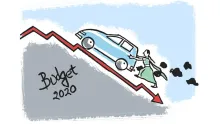
As Budget 2024 approaches, India’s automobile industry is pressing for clearer policy signals to navigate a rapidly evolving market landscape. Manufacturers, suppliers, and dealers are seeking consistency in taxation, incentives for clean mobility, and long-term clarity on regulatory transitions. With demand stabilising after a volatile period and capital investments rising, the sector views the upcoming Budget as a critical inflection point.

By Gurjot Singh , 7 January 2026

India’s automobile retail sector delivered a solid performance in 2025, recording a 7.71% year-on-year growth, according to industry data from dealer bodies. The expansion reflects resilient consumer demand, improved supply chains, and sustained interest across passenger vehicles, two-wheelers, and commercial segments. Easing inflation, better financing availability, and steady economic activity supported vehicle purchases throughout the year. While urban demand remained stable, rural markets showed renewed momentum, aided by improving incomes and infrastructure spending.

By Eknath Deshpande , 5 January 2026

Sales of luxury electric vehicles (EVs) have shown a noticeable slowdown after recent changes to the Goods and Services Tax (GST) framework, signaling a pause in what had been a steadily accelerating segment of India’s auto market. Higher effective acquisition costs have tempered buyer enthusiasm, particularly among price-sensitive high-end consumers who had been weighing EVs against premium internal combustion models. While long-term fundamentals for electric mobility remain intact, the short-term impact of tax adjustments has altered purchase decisions and dealer sentiment.