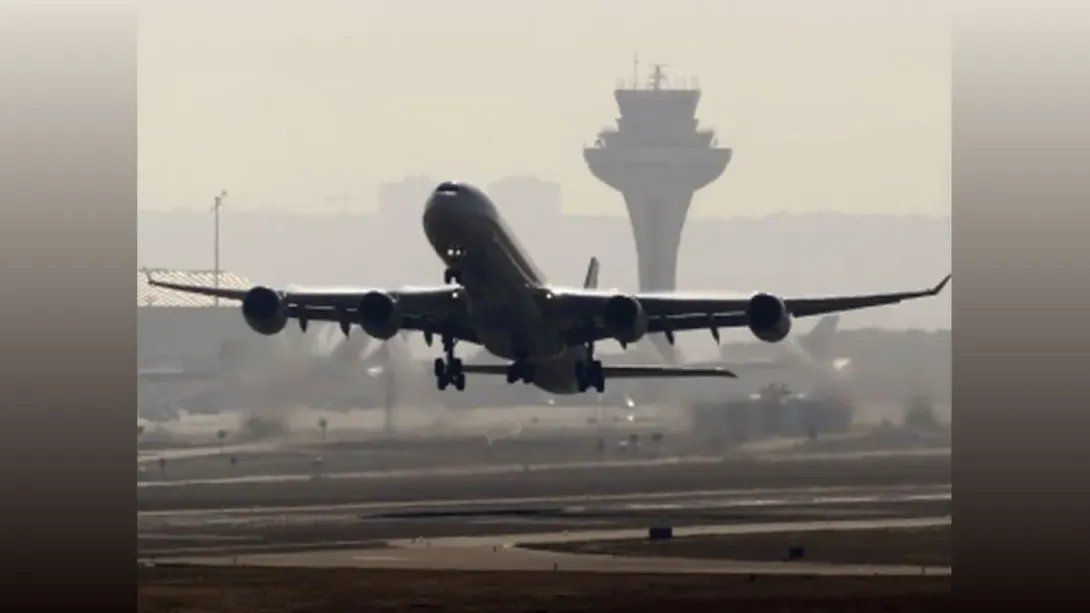
Indian airlines have once again suspended flights to Kathmandu as Nepal faces intensifying political unrest and widespread protests in the capital. Major carriers, including Air India, IndiGo, and SpiceJet, have temporarily halted operations citing safety concerns for passengers and crew. The suspension follows a day of turmoil in Kathmandu, where demonstrations led to the closure of Tribhuvan International Airport. While Nepalese authorities have since reopened the airport, uncertainty lingers as both nations monitor the volatile situation and prioritize the safety of stranded passengers.
Flights Suspended Amid Heightened Security Concerns
Nepal’s capital, Kathmandu, descended into chaos earlier this week as large-scale demonstrations disrupted public life and triggered an airport shutdown. The protests, largely led by young activists, erupted over deep-seated political grievances, corruption allegations, and restrictions on online expression. The unrest prompted India’s leading carriers to halt all operations to and from Nepal’s main international hub.
Air India, which operates multiple daily services between Delhi and Kathmandu, was among the first to announce cancellations, citing an “unfavorable security environment” and “uncertain ground conditions.” IndiGo followed suit, suspending all flights until further notice, while SpiceJet also withdrew services on safety grounds.
The Civil Aviation Authority of Nepal later confirmed that operations at Tribhuvan International Airport would resume after 6 p.m. local time, contingent on security assessments. However, most Indian airlines opted to maintain suspensions until clearer stability returns.
Impact on Passengers and Airlines
The sudden cancellations stranded hundreds of passengers across airports in Delhi, Mumbai, and Kathmandu. Airlines have issued travel advisories and offered full refunds or complimentary rescheduling for affected customers. Many travelers expressed frustration over the abrupt disruptions, but acknowledged the necessity of prioritizing safety during a period of civil unrest.
According to industry officials, airline staff in Kathmandu faced operational challenges due to intermittent internet outages, curfews, and restricted ground mobility. Several crew members stationed in Nepal were advised to remain indoors as a precaution. Indian diplomatic missions in Kathmandu have also urged citizens to avoid non-essential travel and to register for emergency assistance if already present in Nepal.
The financial implications for airlines remain moderate, as the India–Nepal route represents a relatively small portion of their international operations. However, frequent suspensions and volatile conditions could dampen tourism flows and business travel in the region ahead of the winter season—a traditionally busy period for Nepal’s hospitality and aviation sectors.
Regional and Economic Implications
The renewed instability in Nepal comes at a time when the Himalayan nation is attempting to revive its post-pandemic economy through tourism and foreign investment. The temporary halt in air connectivity underscores how regional unrest can quickly ripple across economic and diplomatic channels.
India, Nepal’s largest trading partner and primary aviation link, has maintained close coordination with Nepalese authorities to ensure the safety of Indian nationals and restore operations once conditions stabilize. Industry observers note that repeated disruptions may prompt airlines to reconsider flight frequency, enhance risk assessment protocols, and impose higher insurance premiums for routes deemed unstable.
Outlook: Waiting for Calm to Return
While the immediate suspension of flights reflects caution, aviation experts believe normalcy could return swiftly if political tensions subside. Nepal’s government has indicated that it is working to restore order and reopen essential infrastructure. Nevertheless, travelers and carriers remain on alert as the situation evolves.
For now, the airspace over Kathmandu remains a barometer of the nation’s broader struggle with political volatility—one that continues to test the resilience of its institutions, its citizens, and the region’s critical transportation links.
Comments