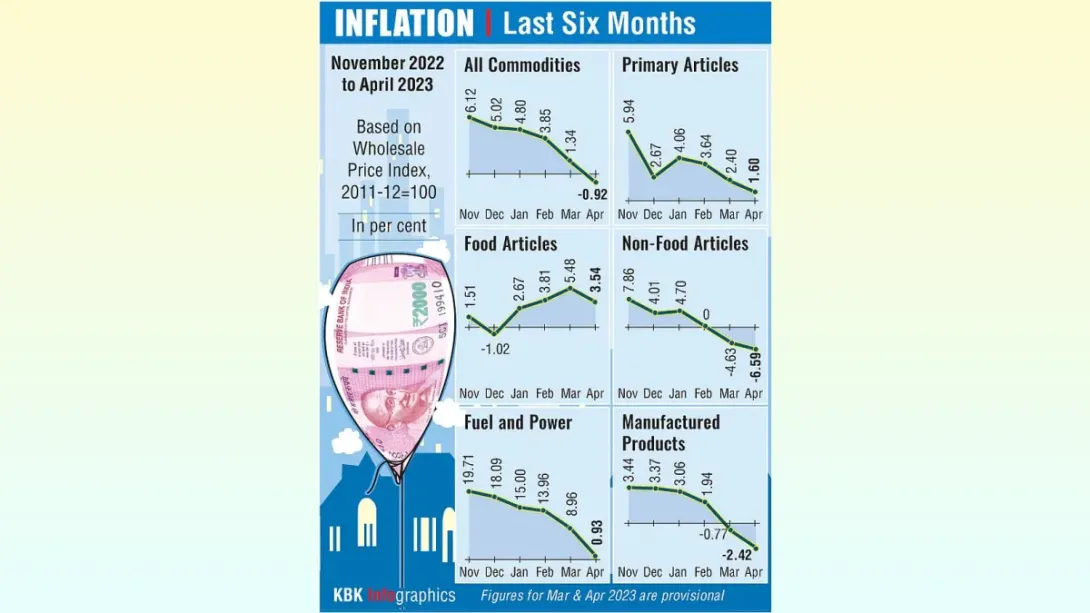
India’s Wholesale Price Index (WPI) inflation moved into positive territory in August, registering 0.52% after several months of deflationary trends. The reversal reflects rising costs of food, fuel, and manufactured products, suggesting that wholesale prices are gaining momentum amid persistent global and domestic challenges. While retail inflation remains elevated, the uptick in WPI signals potential downstream effects on consumer prices in the coming months. Policymakers are now navigating a delicate balance—addressing supply-side constraints, managing import dependencies, and ensuring inflationary pressures do not hinder economic recovery or disrupt growth momentum.
---
Wholesale Prices Move Into Positive Zone
The latest data showed India’s WPI inflation at 0.52% in August, reversing a sustained period of deflation. This shift is largely attributed to higher wholesale prices of essential commodities, including cereals, pulses, vegetables, and energy inputs. Rising international crude oil benchmarks, coupled with supply-side bottlenecks in food distribution, contributed to the uptick.
For manufacturers, this change indicates increasing input costs, which may eventually be passed on to consumers if price pressures persist. The positive reading also highlights improving demand in certain sectors, though it raises concerns about cost-push inflation.
---
Key Drivers of the Upswing
Several categories played a role in pushing wholesale inflation higher:
Food Articles: Prices of onions, pulses, and cereals registered a sharp increase, reflecting supply shortages and seasonal volatility.
Energy Costs: Crude oil and electricity tariffs contributed to higher input costs, pressuring industries reliant on energy-intensive processes.
Manufactured Products: Certain segments, particularly chemicals and textiles, saw modest price increases, signaling recovering demand.
While the WPI had remained subdued in recent months, these combined factors tilted the index back into positive territory.
---
Policy and Economic Implications
The rise in WPI inflation has significant implications for both businesses and policymakers. For industries, rising wholesale costs may erode margins unless offset by higher consumer demand. For policymakers, it poses a challenge, as elevated retail inflation coupled with wholesale price recovery could complicate monetary policy decisions.
The Reserve Bank of India (RBI), which primarily tracks retail inflation for policy action, will closely monitor whether WPI trends spill over into broader consumer price movements. A sustained rise in WPI could make managing inflation expectations more complex, especially amid global uncertainties.
---
Looking Ahead
Economists caution that the positive WPI reading may be the beginning of a trend rather than a one-off spike, particularly with crude oil volatility and ongoing food supply disruptions. However, if global commodity prices stabilize and domestic production recovers, the impact may remain contained.
For now, the transition of wholesale inflation into positive territory serves as an early warning sign. While it reflects improved pricing power for producers, it also underscores the importance of proactive measures to prevent wholesale inflation from translating into broader economic stress.
Comments