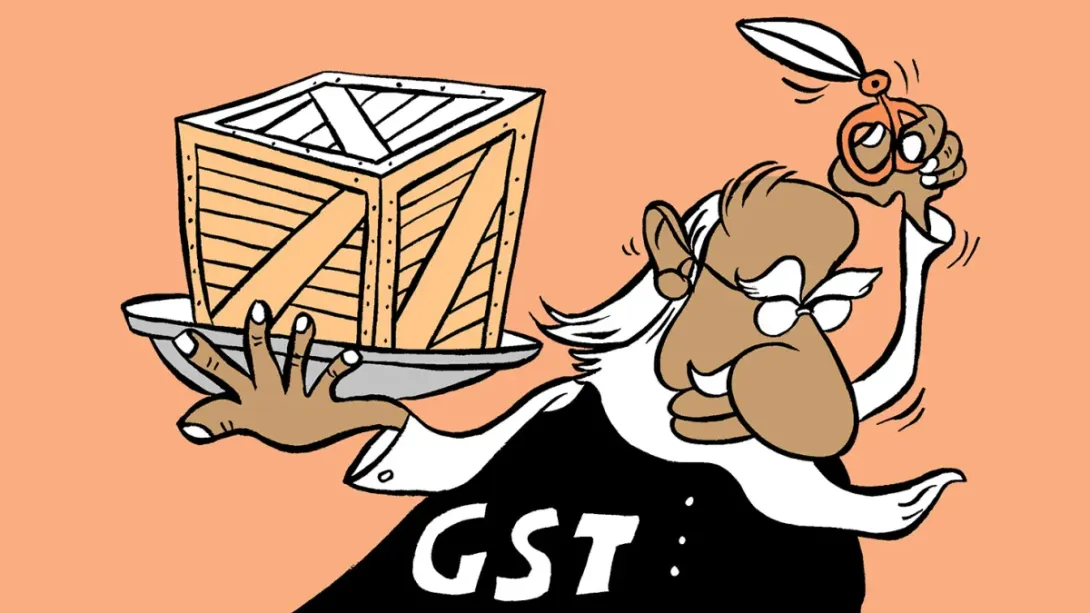
Pharmaceutical major Lupin Ltd. is facing regulatory scrutiny after officials from the Maharashtra Goods and Services Tax Department conducted a search operation at one of its offices. The action, linked to potential discrepancies in tax filings and input tax credit claims, signals heightened enforcement across India’s corporate landscape. While the company has stated it is cooperating fully with authorities, the development underscores increasing compliance expectations for large enterprises. The episode also reflects broader fiscal vigilance by state tax authorities aiming to curb revenue leakages and reinforce transparency within high-value sectors such as pharmaceuticals.
Regulatory Action and Immediate Developments
Officials from the Maharashtra GST Department carried out a search operation at premises associated with Lupin Limited, according to individuals familiar with the matter. The inspection was conducted as part of an ongoing assessment of Goods and Services Tax compliance.
Preliminary information indicates that the inquiry centers on potential irregularities related to input tax credit claims and transaction reporting. Authorities have not disclosed the financial quantum under examination, nor have they publicly specified whether the investigation pertains to a single assessment year or multiple fiscal periods.
Lupin, in a brief statement, acknowledged the visit and affirmed that it is extending full cooperation to the department.
Understanding GST Enforcement in Maharashtra
The Goods and Services Tax regime, introduced in 2017, consolidated multiple indirect taxes into a unified framework. Since its rollout, enforcement agencies have intensified audits to detect mismatches between reported liabilities and credit claims.
The Maharashtra GST Department, overseeing one of India’s largest state economies, has stepped up compliance reviews, particularly in sectors characterized by complex supply chains.
Pharmaceutical companies often operate through multi-tier distribution networks involving contract manufacturing, third-party vendors and export transactions. Such structures increase the intricacy of tax reporting.
Enforcement actions are typically triggered by data analytics flags, discrepancies in returns or intelligence inputs.
Implications for the Pharmaceutical Sector
India’s pharmaceutical industry contributes significantly to both domestic healthcare supply and export revenue. Companies operating in this sector manage high transaction volumes, cross-border shipments and varying tax treatments across product categories.
A search operation at a leading manufacturer such as Lupin sends a broader signal to the industry regarding regulatory vigilance.
Compliance risk management has become central to corporate governance frameworks. Firms are increasingly investing in internal audits, automated reconciliation systems and advisory services to mitigate exposure.
Even absent formal allegations of wrongdoing, regulatory scrutiny can influence investor sentiment in the short term.
Corporate Response and Market Sensitivity
Publicly listed companies are obligated to disclose material regulatory developments to stock exchanges. Transparency in communication plays a critical role in stabilizing market perception.
In similar instances across industries, companies have emphasized procedural cooperation while clarifying that such searches do not automatically imply tax evasion or liability confirmation.
Market participants typically assess the potential financial impact by estimating disputed tax amounts, interest liabilities and penalties.
Until official findings are released, valuation adjustments remain speculative.
Nonetheless, regulatory attention tends to introduce volatility, particularly in compliance-sensitive sectors.
The Role of Data Analytics in Tax Investigations
Modern tax administration relies heavily on data analytics. Authorities cross-reference GST filings, e-invoice data and supply chain declarations to identify anomalies.
Automated systems can flag inconsistencies in input tax credits claimed versus taxes paid by vendors.
In high-volume industries, even minor reconciliation gaps may prompt inquiry.
For corporations, ensuring seamless integration between enterprise resource planning systems and GST reporting platforms is essential.
Digital compliance infrastructure has transitioned from operational necessity to strategic imperative.
Legal and Financial Considerations
Should authorities determine discrepancies, outcomes may include revised assessments, recovery notices or monetary penalties denominated in Rs. The magnitude would depend on the scale and nature of findings.
Companies typically engage tax counsel to review documentation, reconcile records and, if necessary, contest assessments through appellate channels.
It is important to distinguish between procedural verification and confirmed violations.
Search operations form part of investigative due process and do not constitute adjudication.
Financial markets generally await formal adjudication before pricing in long-term impact.
Broader Enforcement Trends
Across India, tax authorities have intensified compliance monitoring as governments seek to strengthen revenue mobilization.
Post-pandemic fiscal pressures have amplified the emphasis on plugging leakages and ensuring accurate tax remittance.
Large enterprises, due to transaction scale, often become focal points for verification drives.
Industry observers note that regulatory activism reflects institutional maturation within the GST framework.
Enhanced enforcement may ultimately strengthen system credibility, though it can temporarily unsettle corporate sentiment.
Corporate Governance and Compliance Evolution
The evolving regulatory landscape has elevated the role of chief financial officers and compliance officers.
Boards increasingly prioritize tax risk oversight alongside operational and financial metrics.
Robust internal controls, periodic forensic audits and real-time reconciliation processes are now standard practice among leading firms.
For multinational pharmaceutical entities, harmonizing domestic tax obligations with international transfer pricing policies adds further complexity.
Proactive compliance culture reduces exposure to enforcement shocks.
Conclusion
The search conducted by Maharashtra GST authorities at Lupin’s office illustrates the intensifying scrutiny facing large corporations under India’s unified tax regime. While details remain limited and no definitive liability has been established, the development highlights the importance of rigorous compliance frameworks in complex, high-value industries.
For investors and industry stakeholders, the episode serves as a reminder that regulatory oversight is integral to modern corporate operations. As tax authorities deploy increasingly sophisticated analytical tools, companies must align governance structures accordingly. In an environment where transparency and accountability shape market confidence, compliance resilience has become as critical as commercial performance.
Comments