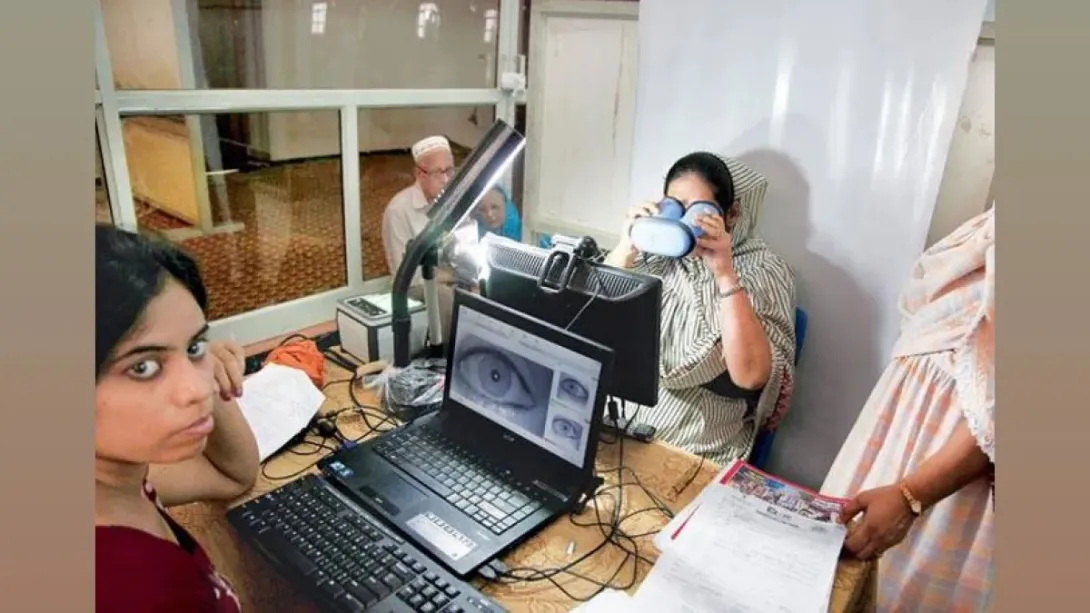
Fiji’s Prime Minister recently visited the Unique Identification Authority of India (UIDAI) to gain first-hand insights into India’s world-renowned Aadhaar digital identity program. The visit highlights growing global interest in India’s digital governance model, which has become a benchmark for inclusive financial systems, efficient public service delivery, and large-scale identity management. For Fiji, a small island nation with aspirations to expand its digital economy, the engagement marks an important step toward adopting scalable solutions that can enhance transparency, drive financial inclusion, and strengthen citizen-centric governance.
Strategic Significance of the Visit
The Fijian Prime Minister’s visit to UIDAI is not merely symbolic but a reflection of Fiji’s commitment to accelerating digital transformation. India’s Aadhaar system, which assigns a unique identification number to over 1.3 billion citizens, has become one of the largest biometric identity platforms in the world. By studying its design and governance mechanisms, Fiji aims to explore how such systems can be adapted to local needs while ensuring security and inclusivity.
The meeting underscores India’s growing influence as a knowledge partner for developing nations that are seeking to replicate best practices in digital infrastructure.
Aadhaar as a Global Model
Launched in 2009, Aadhaar has revolutionized the way India delivers government services and welfare schemes. By linking subsidies, pensions, and banking services to unique identity numbers, the program has reduced leakages, improved efficiency, and widened access to financial systems. Globally, Aadhaar is often cited as a case study in cost-effective public service delivery, particularly in developing economies where infrastructure and resources are limited.
Fiji’s interest in Aadhaar reflects its ambition to adopt a secure, technology-driven framework that can address challenges related to citizen verification, public assistance, and financial access.
Implications for Fiji’s Digital Journey
For Fiji, the introduction of a robust identity system could transform governance and economic participation. A digital ID program modeled on Aadhaar could streamline welfare distribution, enhance transparency in public programs, and strengthen trust in government services.
Moreover, in a nation highly reliant on tourism and remittances, a standardized identity framework could support financial institutions in reducing fraud risks, expanding credit access, and promoting digital banking adoption. Such an initiative would also position Fiji as a regional leader in digital governance within the Pacific Islands.
India’s Expanding Digital Diplomacy
The visit also reflects India’s evolving role as a global hub of digital diplomacy. Through platforms such as Aadhaar, Unified Payments Interface (UPI), and the broader “India Stack,” the country has demonstrated the scalability of digital public infrastructure for inclusive growth.
By sharing its expertise with nations like Fiji, India is not only strengthening bilateral relations but also cementing its position as a thought leader in digital transformation.
Outlook
The Fijian Prime Minister’s visit to UIDAI symbolizes a strategic alignment of vision—where small island states can learn from India’s large-scale innovations in governance and financial inclusion. If implemented effectively, a digital identity framework could be a game changer for Fiji, reshaping its public service ecosystem and positioning it for sustainable digital growth.
As the world increasingly turns toward digital-first governance, collaborations like these may set the stage for a new wave of international partnerships centered on technology-driven inclusion.
Comments