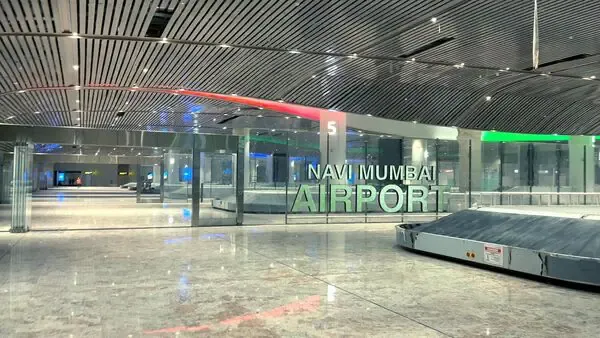
The Navi Mumbai International Airport (NMIA), one of India’s most ambitious infrastructure projects, is rapidly approaching its operational phase, with authorities confirming significant progress in construction and system integration. Designed to ease congestion at Mumbai’s overburdened Chhatrapati Shivaji Maharaj International Airport, the greenfield project is poised to redefine the region’s aviation and logistics ecosystem. With world-class facilities, advanced sustainability measures, and a focus on efficiency, NMIA is expected to become a critical hub for both domestic and international air traffic, strengthening India’s standing in the global aviation market.
Strategic Importance of NMIA
The Navi Mumbai International Airport holds strategic significance for India’s aviation sector. Mumbai currently handles over 45 million passengers annually, with its single-runway system operating close to saturation. The new facility, located in Ulwe, Navi Mumbai, is being developed to accommodate the surge in passenger and cargo traffic expected in the coming decades. Once fully operational, NMIA is projected to handle 60 million passengers annually, effectively complementing Mumbai’s existing airport and reducing operational strain.
Project Progress and Milestones
Construction at NMIA has accelerated in recent months, with runway development, terminal building structures, and air traffic control towers nearing completion. Authorities have also begun advanced system testing for navigation, safety, and baggage handling to ensure seamless operations from day one. Phase I of the project, scheduled to be completed in the coming year, will enable the airport to handle 20 million passengers annually, with subsequent phases expanding capacity significantly.
Economic and Business Implications
Beyond easing passenger congestion, NMIA is expected to play a pivotal role in boosting Maharashtra’s economy. Industry experts estimate that the project will generate thousands of direct and indirect jobs during both construction and operational phases. Additionally, the airport’s cargo facilities are designed to strengthen India’s logistics backbone, making it a preferred gateway for international trade. With improved connectivity to the Mumbai Trans Harbour Link, Navi Mumbai, and Pune, the project will significantly enhance regional business competitiveness.
Focus on Sustainability and Technology
A hallmark of NMIA’s design is its emphasis on sustainability. The airport will incorporate renewable energy sources, water recycling systems, and efficient waste management practices. Technology-driven passenger experiences—such as biometric boarding, contactless check-ins, and AI-powered surveillance—are also part of its operational blueprint, making it one of the most advanced airports in Asia. These measures align with India’s broader push toward green infrastructure and digital transformation.
Conclusion
As Navi Mumbai International Airport moves closer to its opening, it symbolizes more than just infrastructure expansion—it represents India’s growing aspirations in global aviation. With its state-of-the-art design, strategic location, and sustainable framework, NMIA is poised to become a cornerstone of the country’s economic growth. For businesses, travelers, and policymakers alike, the airport’s completion will mark a transformative chapter in India’s journey toward becoming a world-class aviation hub.
Comments