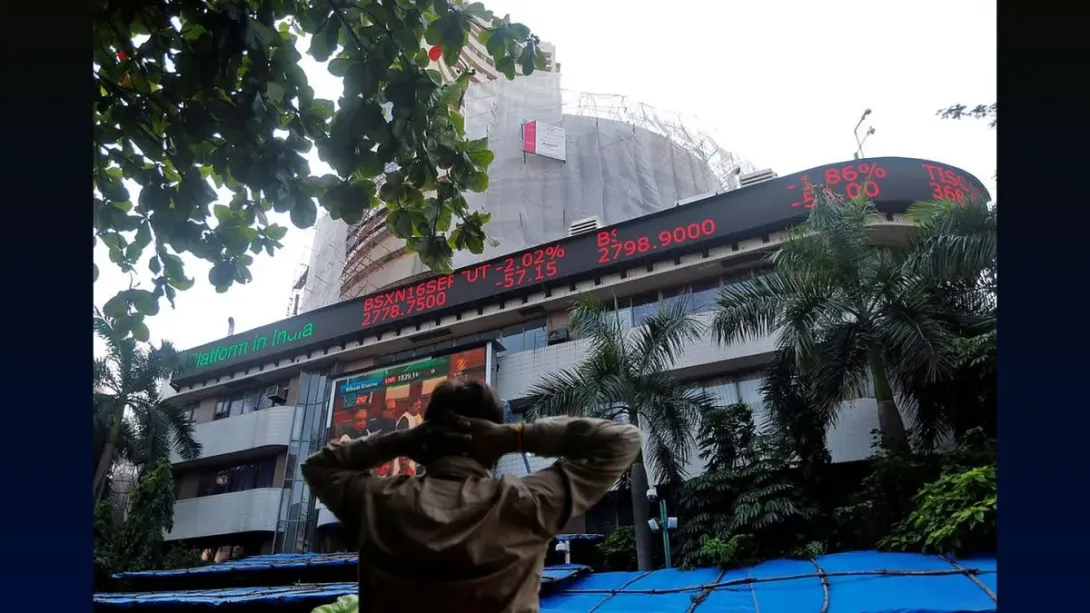
Indian equity markets staged a strong rebound on Monday, buoyed by positive cues from Asian peers and a resurgence of foreign institutional investor (FII) inflows. The benchmark indices, Sensex and Nifty, advanced sharply as investors shrugged off recent volatility driven by global economic uncertainty. Renewed optimism in global risk assets, coupled with easing US Treasury yields and a stable rupee, strengthened sentiment across key sectors including banking, IT, and energy. Analysts suggest that sustained FII participation and improving macroeconomic indicators could provide near-term momentum to domestic equities.
Asian Markets Drive Recovery
The rally in Indian equities mirrored broader gains across Asian markets, which opened higher on renewed optimism over the global economic outlook. A softer US dollar and declining bond yields bolstered risk appetite, prompting foreign investors to return to emerging markets. Benchmarks in Japan, South Korea, and Hong Kong all registered notable gains, setting a positive tone for the Indian market’s opening session.
Indian indices responded swiftly, with the Sensex climbing over 500 points and the Nifty reclaiming the 22,000 mark. The uptrend was largely driven by heavyweights in the financial, IT, and consumer sectors, signaling renewed institutional interest after weeks of selling pressure.
Foreign Inflows and Sectoral Momentum
Data from stock exchanges indicated a fresh inflow of foreign institutional investments exceeding Rs. 1,200 crore in the cash segment, reversing the trend of persistent outflows seen in previous sessions. Market participants attributed this shift to improving global liquidity conditions and expectations that the US Federal Reserve may delay further rate hikes.
Among the top gainers were banking and financial stocks, as improved liquidity conditions boosted credit growth outlooks. The Nifty Bank index rose nearly 1.5%, with leading private lenders such as HDFC Bank and ICICI Bank showing strong intraday momentum. Information technology stocks also participated in the rally, aided by a weaker dollar and optimistic demand forecasts for the coming quarters.
Domestic Resilience and Policy Stability
The domestic macroeconomic backdrop remains supportive, with India maintaining steady GDP growth projections and manageable inflation levels. The Reserve Bank of India’s commitment to price stability, combined with the government’s continued emphasis on capital expenditure and infrastructure development, has helped sustain investor confidence.
Economists also point to resilient corporate earnings and robust tax collections as indicators of structural economic strength. “India’s fundamentals remain solid compared to other emerging markets. The recent volatility appears more cyclical than structural,” said a senior market strategist at a leading brokerage.
Outlook: Near-Term Optimism with Caution
Market experts caution that while the rebound signals renewed optimism, short-term fluctuations cannot be ruled out amid global uncertainties. Factors such as crude oil price volatility, geopolitical tensions, and future US monetary policy moves could influence market direction in the weeks ahead.
However, with foreign inflows resuming, rupee stability, and strong domestic demand, the broader sentiment remains constructive. Analysts expect the Nifty to maintain its upward bias, provided it sustains above key technical support levels.
“The combination of FII buying, healthy corporate earnings, and macroeconomic stability could drive a gradual re-rating of Indian equities in the near term,” noted an investment advisor.
Conclusion
The market’s latest rebound underscores the resilience of India’s financial ecosystem in the face of global headwinds. As FII inflows return and domestic fundamentals remain robust, Indian equities appear poised for a steady climb—albeit with intermittent corrections. For investors, the current environment offers opportunities in quality large-cap and select mid-cap segments, supported by the twin pillars of global liquidity and domestic economic strength.
Comments