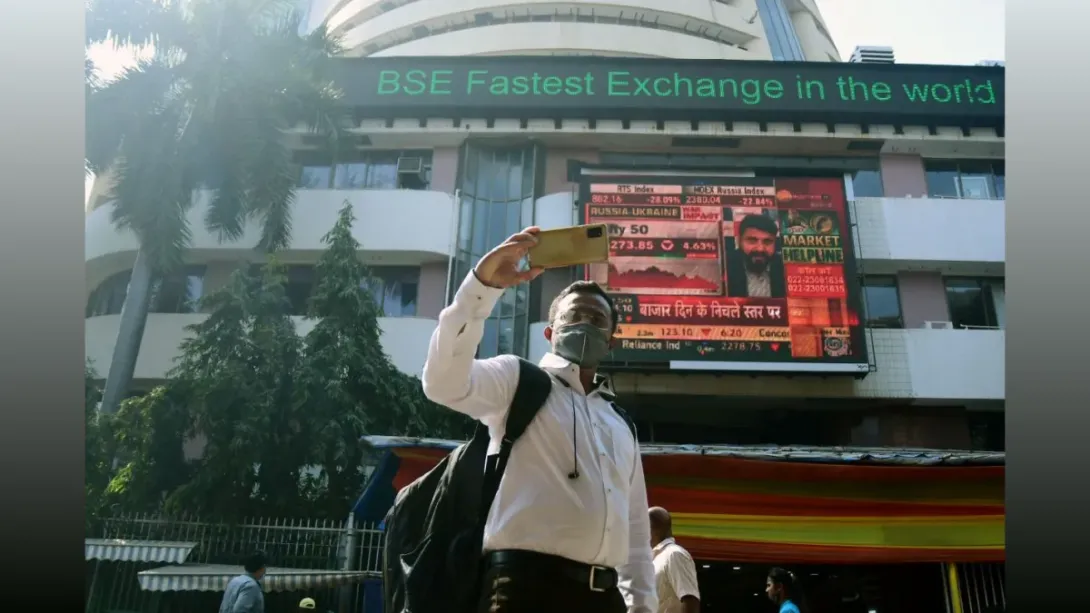
Indian equity benchmarks witnessed a broad-based decline as selling pressure intensified across energy and commodity-linked stocks, while persistent foreign portfolio outflows further dampened investor sentiment. Oil and gas shares led the retreat, mirroring global crude price volatility and concerns around geopolitical tensions. Simultaneously, foreign institutional investors (FIIs) continued to withdraw capital from domestic markets, adding to the downside pressure. These combined forces triggered a cautious mood across Dalal Street, with broader market indices also echoing the trend. Analysts now expect near-term volatility to persist amid shifting global cues and sectoral realignments.
---
Energy Stocks Lead the Downturn
Shares of oil and gas companies came under significant pressure during the session, dragging down key indices. The sharp drop followed renewed fluctuations in global crude oil prices, driven by uncertainty over supply-demand dynamics and rising geopolitical concerns in the Middle East.
Investors appeared to be reassessing exposure to the sector, especially amid fears of shrinking refining margins and potential inventory losses. Public sector oil majors and private downstream players alike faced sharp selling, reflecting broader concerns over sector profitability in a volatile commodity environment.
---
Foreign Institutional Investors Pull Back Capital
The downturn in equities was further exacerbated by continued capital outflows from foreign institutional investors. FIIs have been steadily reducing exposure to Indian markets in recent sessions, largely influenced by global risk-off sentiment, strengthening U.S. dollar, and expectations of delayed rate cuts by major central banks.
Data shows consistent net selling by foreign funds, particularly in heavyweight sectors such as banking, infrastructure, and energy. This has not only amplified volatility but also weakened the rupee marginally against global currencies, prompting further defensive positioning by traders.
---
Broader Markets Echo the Weakness
The selling wasn’t confined to blue-chip counters. Mid-cap and small-cap indices also registered losses, albeit more modest in comparison to their large-cap counterparts. Sector rotation and profit-booking ahead of upcoming macroeconomic data releases likely contributed to the subdued tone across market segments.
Notably, financial services and capital goods stocks also lost ground, with investors appearing to trim positions in economically sensitive sectors amid rising uncertainty.
---
Global Cues Add to Pressure
The Indian market’s decline was broadly aligned with weakness in global equities. Concerns over sluggish economic recovery in China, fluctuating energy prices, and heightened volatility in U.S. bond yields created a risk-averse environment globally. These external pressures further weighed on domestic sentiment.
Meanwhile, apprehension over upcoming inflation and interest rate data, both in India and abroad, is keeping investors cautious. Traders are now closely watching commentary from central banks and crude supply forecasts, which may hold sway over short-term market direction.
---
Outlook: Volatility May Persist in Near Term
With macroeconomic uncertainties still clouding the global outlook, and institutional flows turning net negative, analysts expect the domestic markets to remain range-bound in the near term. The immediate focus will be on inflation trends, currency stability, and any signals from central banks regarding monetary easing.
For investors, this may be a time to prioritize quality over momentum, with emphasis on fundamentally resilient sectors such as IT services, pharmaceuticals, and consumer staples that offer defensive characteristics in volatile environments.
---
Final Thoughts: A Test of Market Resilience
The recent pullback is not necessarily a sign of structural weakness, but rather a reflection of short-term global volatility and portfolio reshuffling. With long-term fundamentals still supportive, including stable corporate earnings and domestic consumption trends, the current correction could offer selective buying opportunities for disciplined investors.
Nonetheless, market participants would do well to brace for choppy sessions ahead, as capital flows and commodity movements continue to shape sentiment on both sides of the trade.
Comments