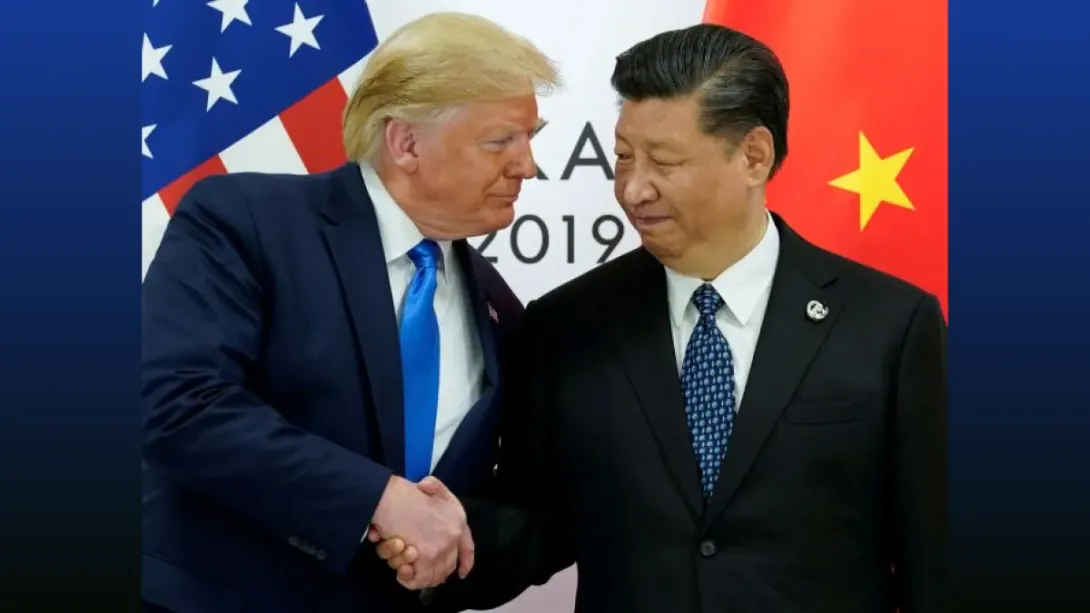
In a pivotal diplomatic engagement, former U.S. President Donald Trump and Chinese President Xi Jinping met to discuss the trajectory of US-China relations, addressing issues ranging from trade imbalances and technology rivalry to regional security and global economic stability. The talks, held in a cautiously optimistic atmosphere, signaled a potential thaw after years of escalating tensions that reshaped global trade dynamics. Both leaders emphasized the need for cooperation, yet remained firm on core national interests, suggesting that while dialogue has resumed, strategic competition between the world’s two largest economies will continue to define the next phase of global geopolitics.
Renewed Dialogue After Years of Friction
The long-anticipated meeting between Donald Trump and Xi Jinping marked a crucial moment in efforts to recalibrate ties between Washington and Beijing, strained by years of tariff wars, supply chain disruptions, and geopolitical mistrust.
The talks—held amid heightened global uncertainty—focused on trade, technology, and security, three pillars that have defined the world’s most consequential bilateral relationship. While both sides avoided overt confrontation, the discussions underscored deep-seated differences on industrial policy, data governance, and global influence.
Observers noted that the tone of the meeting was measured but cautious, with both leaders acknowledging the economic costs of prolonged confrontation. Trump, known for his aggressive trade stance during his presidency, reiterated concerns over intellectual property violations and trade deficits, while Xi defended China’s development model and called for “mutual respect and non-interference.”
Trade War Legacy and Economic Implications
The US-China trade war, initiated in 2018, has left enduring marks on global commerce. Tariffs on billions of dollars’ worth of goods disrupted supply chains, raised consumer prices, and reshaped global manufacturing hubs, pushing companies to diversify into markets like Vietnam, India, and Mexico.
During the meeting, trade officials from both countries reportedly discussed the possibility of rolling back select tariffs, particularly in technology and agriculture, sectors critical to both economies.
Analysts suggest that any relaxation of tariffs could boost investor sentiment and stabilize global markets that have been jittery amid fears of prolonged economic decoupling. However, both sides stopped short of committing to a formal trade agreement, underscoring the complexity of aligning their economic priorities.
Technology and Strategic Rivalry
One of the most contentious aspects of US-China relations remains technological dominance. The Trump administration had imposed restrictions on Chinese tech giants such as Huawei and ZTE, citing national security concerns. These measures, in turn, accelerated China’s push for technological self-reliance, particularly in semiconductors, artificial intelligence, and 5G infrastructure.
At the meeting, Trump and Xi discussed potential frameworks for data security, AI governance, and cross-border tech trade, though little progress was made. The conversation reflected the broader reality that technological competition has replaced traditional trade as the new battleground between the two superpowers.
Geopolitical analysts view this rivalry as a defining factor for the next decade, influencing global supply chains, digital standards, and innovation ecosystems.
Geopolitical and Security Dimensions
Beyond trade and technology, the Trump-Xi dialogue also touched upon regional security issues, including tensions in the South China Sea, Taiwan, and the Korean Peninsula. While both sides reaffirmed their commitment to avoiding direct conflict, their strategic interests remain fundamentally opposed.
China reiterated its stance on Taiwan as an “internal matter,” while the U.S. emphasized the importance of maintaining peace and freedom of navigation in the Indo-Pacific. The leaders also exchanged views on global hotspots, including the Middle East and Ukraine, emphasizing the need for “responsible major power engagement” to prevent escalation.
Diplomatic sources described the exchanges as “frank yet constructive,” signaling that dialogue channels—once frozen during the height of tensions—are now being reopened, even if mutual suspicion persists.
Global and Market Reactions
Financial markets responded cautiously to news of the Trump-Xi meeting. Asian equities posted modest gains, while the US dollar and Chinese yuan traded within a narrow range, reflecting investor optimism tempered by uncertainty. Analysts at major financial institutions such as Goldman Sachs and Nomura suggested that while the meeting reduced short-term geopolitical risk, it did not materially alter the long-term structural divergence between the two economies.
Business leaders across industries—from semiconductors to renewable energy—welcomed the resumption of dialogue but urged both governments to provide policy clarity to restore confidence in global trade flows.
Outlook: Between Competition and Coexistence
The Trump-Xi meeting represents more than a diplomatic formality—it is a test of whether the world’s two largest economies can compete responsibly while coexisting in a fragmented global order. Both nations face domestic economic headwinds: the U.S. grappling with inflation and political polarization, and China managing a real estate slowdown and sluggish exports.
While the talks yielded no major breakthroughs, the symbolism of re-engagement itself holds strategic significance. It signals a shared recognition that prolonged hostility benefits neither side, and that managed competition, not confrontation, is likely to define future US-China relations.
Comments